Use for Free

Design Tips
Small yard, big impact — five layout ideas
6 min read

A small yard doesn't need to feel small. The right layout can make a compact space feel twice its size — the trick is working with the constraints instead of against them.
1. Use diagonal lines to stretch the space
A straight path or lawn edge running parallel to your fence makes a yard feel boxed in. Angling paths, beds, or lawn edges diagonally draws the eye across the widest possible line, making the space read as larger than it is.
Angle paving or lawn edges instead of running them straight
Place a focal point at the far diagonal corner
Avoid symmetrical layouts in tight spaces — they emphasize boundaries
2. Layer height instead of spreading width
When there's no room to go wide, go up. Vertical elements — trellises, tiered planters, climbing vines — add visual interest without eating into usable ground space.
Add a trellis or vertical planter along a fence line
Use tiered plant stands instead of ground-level pots
Train climbing plants upward rather than letting them sprawl
3. Define zones instead of one open area
A single undivided yard can feel like leftover space. Breaking it into small, distinct zones — a seating area, a planting bed, a path — gives each part a clear purpose and makes the whole yard feel more intentional.
Use a change in material (gravel to pavers) to mark a new zone
Keep each zone small but clearly bordered
Avoid trying to fit too many zones — two or three is usually enough
4. Keep the plant palette tight
A small space with too many plant varieties can look cluttered rather than lush. Repeating a smaller selection of plants throughout the yard creates a calmer, more cohesive look that actually reads as more spacious.
Choose 3-5 plant varieties and repeat them
Vary height and texture within that smaller palette
Save bold, unique plants for a single focal point, not scattered throughout
5. Let one feature do the work
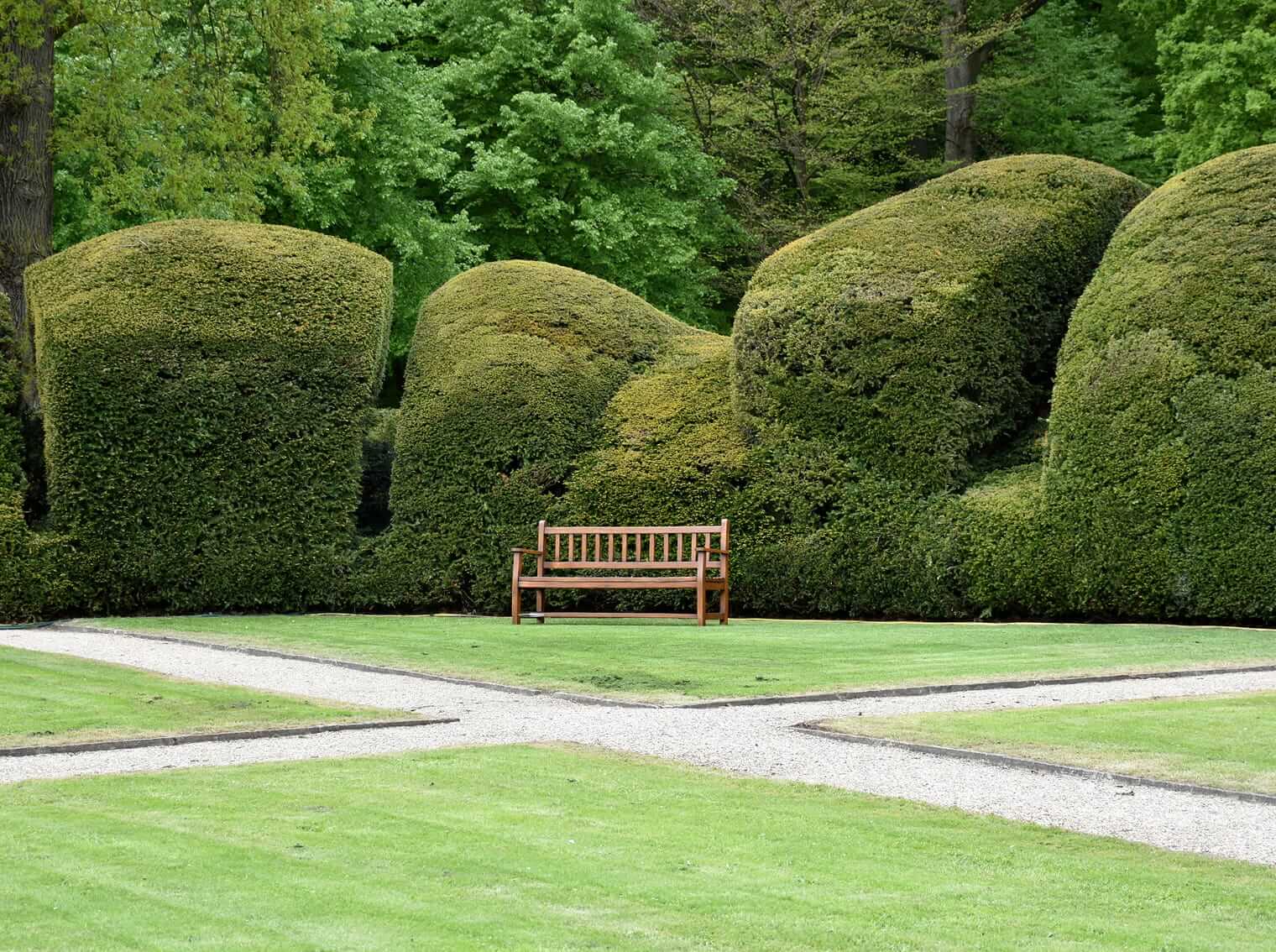
Instead of spreading attention across many small details, a single strong feature — a well-placed bench, a small water feature, one striking tree — gives the eye somewhere to land and makes the rest of the space feel like it's built around something, not just filled in.
Choose one feature and build the rest of the layout around it
Keep surrounding elements simple so the feature stands out
Position it where it's visible from the main viewing point (a window, the entry)
Small yards reward restraint more than large ones do. A few well-placed decisions go further than trying to fit in everything a bigger garden could hold.